


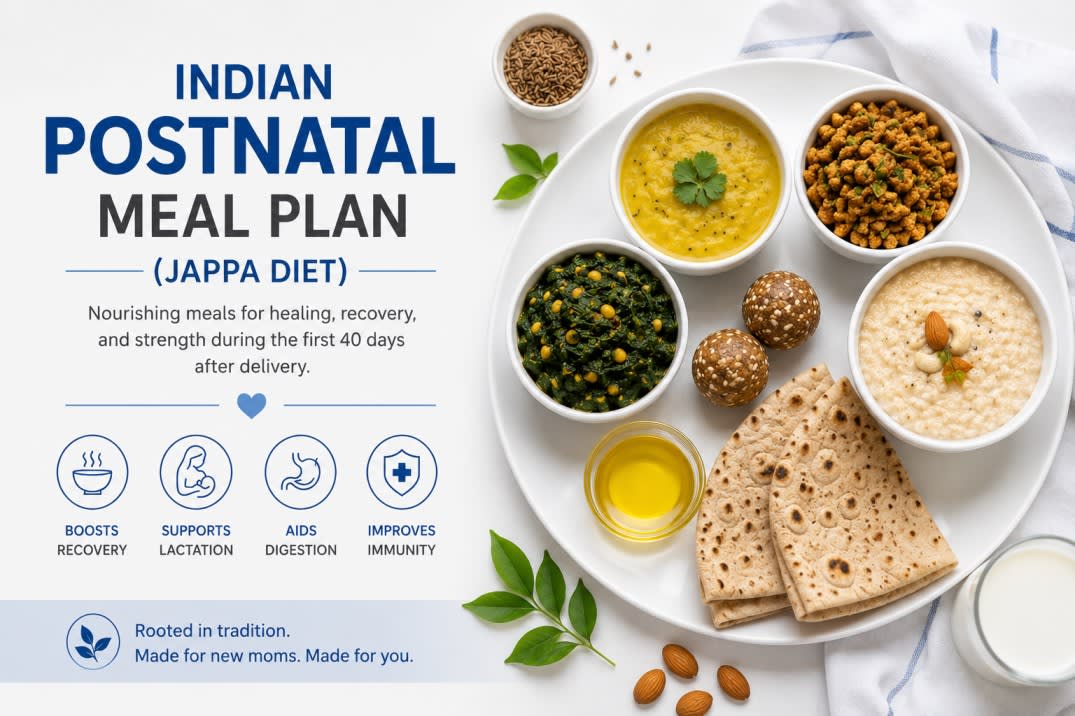
A Complete Diet Guide for New Mothers After Delivery
Traditional Indian Wisdom + Modern Nutrition Science
After delivery, a mother's body needs extra nutrition for healing, milk production, and energy. This plan is rooted in Indian tradition ("jaapa" diet) and backed by modern nutrition. It covers the first 40 days (saava maheena) — the most critical recovery period.
Daily Nutritional Goals for a New Mother
A breastfeeding mother needs approximately:
Calories
2200–2500 kcal
Protein
65–70 g/day
Calcium
1000–1200 mg
Water/Fluids
3–4 litres/day
Week 1 (Day 1–7): Healing & Gentle Nourishment
The first week focuses on easy-to-digest, warm, light foods. The digestive system is weak after delivery. Avoid raw, cold, and heavy foods.
Week 1 — Sample Daily Meal Plan
Meal Time
Food / Dish
Why It Helps
Early Morning 5:30–6:00 AM
Warm water with ajwain (carom seeds) + 2 soaked almonds + 2 walnuts
Reduces gas, bloating; boosts brain-healthy fats
Breakfast 7:30–8:00 AM
Daliya (broken wheat porridge) with ghee + warm milk with haldi & saunf
Easily digestible; haldi fights infection; ghee lubricates gut
Mid-Morning 10:00 AM
Coconut water + 1 banana OR dry fruit ladoo (gondh, methi, dry fruits)
Electrolytes; gondh ladoo is traditional galactagogue (boosts milk)
Lunch 12:30–1:00 PM
Soft rice + moong dal (yellow) + bottle gourd (lauki) sabzi + ghee
Light protein; lauki prevents constipation; ghee aids absorption
Evening Snack 4:00–4:30 PM
Warm ajwain/saunf tea + suji halwa with ghee / sabudana khichdi
Warming spices; suji gives quick energy
Dinner 7:00–7:30 PM
Khichdi (rice + moong dal) with ghee + warm soup (tomato/spinach)
Khichdi is the ultimate healing food — complete protein + carbs
Bedtime 9:30–10:00 PM
Warm haldi doodh (turmeric milk) with a pinch of black pepper + ghee
Anti-inflammatory; promotes healing sleep; boosts milk supply
Week 1 Rule: No spicy food, no fried food, no cold drinks, no raw salads. Everything should be warm, soft, and freshly cooked. Avoid refrigerated or leftover food.
Week 2 (Day 8–14): Building Strength
Digestion improves. Gradually introduce more proteins, iron-rich foods, and variety. Continue ghee in every meal.
Week 2 — Sample Daily Meal Plan
Meal Time
Food / Dish
Early Morning
Methi (fenugreek) water + 4–5 soaked almonds + 2 dates
Methi boosts milk supply; dates give iron & natural sugar energy
Breakfast
Moong dal chilla / besan chilla with ghee + warm milk
High protein; easy to make; gives satiety till mid-morning
Mid-Morning
Gondh ladoo / panjiri OR fresh papaya / pomegranate
Traditional postpartum sweet; papaya aids digestion & milk
Lunch
Chapati (1–2) with ghee + palak dal + aloo-methi sabzi + curd
Iron from palak; methi for milk; curd for probiotics
Evening Snack
Dry fruit milkshake (almond + dates + milk) + murmura chivda
Energy-dense; calcium-rich; light on stomach
Dinner
Khichdi OR soft chapati + arhar/masoor dal + lauki/tinda sabzi
Continue easy-to-digest meals at night; avoid heaviness
Bedtime
Haldi milk + ashwagandha (if prescribed) + 2 cashews
Reduces fatigue; ashwagandha supports hormonal balance
Week 3 & 4 (Day 15–30): Full Recovery Diet
By Week 3, most mothers feel significantly better. Expand the diet to include more variety, regional foods, and increase iron and calcium intake.
7-Day Rotating Weekly Plan (Week 3–4)
Early Morn.
Methi water + almonds
Ajwain water + walnuts
Haldi milk + dates
Coconut water + almonds
Methi water + fig
Warm lemon water + almonds
Milk + soaked raisins
Breakfast
Daliya porridge
Poha with peanuts
Moong chilla
Upma + coconut chutney
Besan chilla + curd
Dosa + sambar
Paratha + ghee + curd
Mid-Morn.
Gondh ladoo
Banana + milk
Papaya
Dry fruit milkshake
Panjiri + milk
Chikoo / sapota
Dates + warm milk
Lunch
Khichdi + ghee
Rice + dal + sabzi
Chapati + rajma
Rice + sambar + sabzi
Chapati + palak paneer
Rice + kadhi + sabzi
Puri + aloo sabzi + dal
Snack
Saunf tea + suji halwa
Murmura + tea
Roasted chana + milk
Fruit salad (warm)
Sabudana khichdi
Dry fruit laddoo
Milk + banana
Dinner
Moong dal soup + roti
Khichdi + ghee
Dal tadka + roti
Soft rice + dal + lauki
Chapati + arhar dal
Khichdi + sabzi
Roti + palak dal + ghee
Bedtime
Haldi doodh
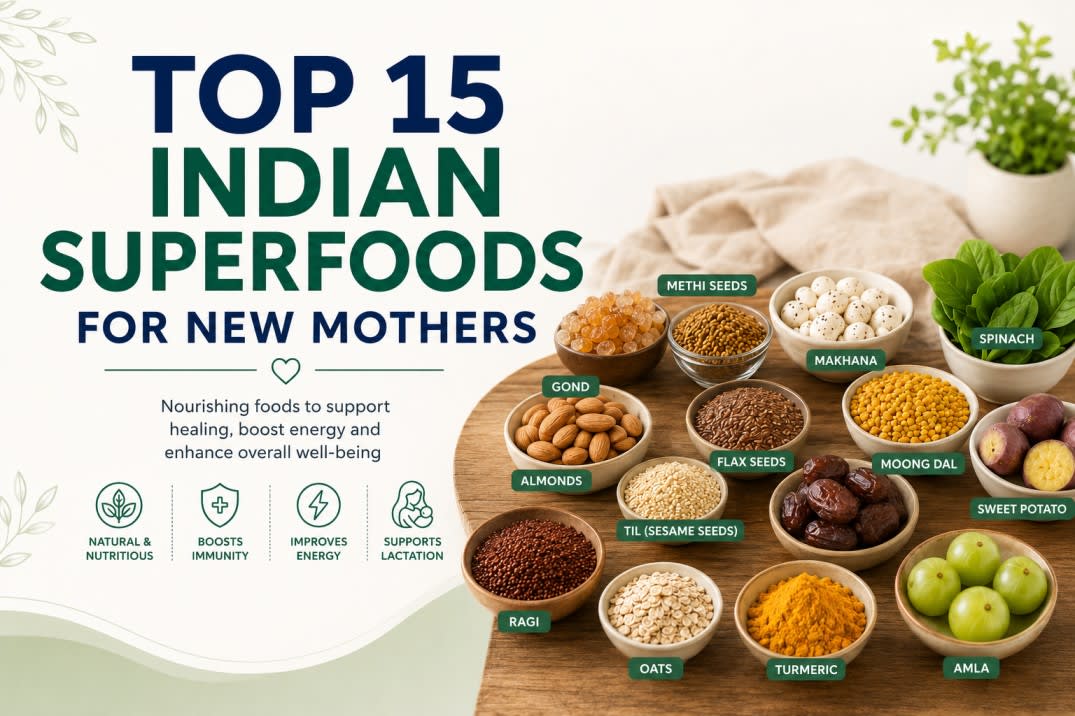
Top 15 Indian Superfoods for New Mothers
Superfood
Ghee (clarified butter)
Heals gut, lubricates joints, boosts brain
1–2 tsp in every meal
Gondh (edible gum)
Strengthens back, boosts milk
Gondh ladoo — 1–2 daily
Methi (fenugreek)
Galactagogue, controls blood sugar
Water, sabzi, or seeds
Ajwain (carom seeds)
Reduces gas, uterus cleansing
Warm water or tadka
Saunf (fennel)
Milk booster, digestive
Tea or after meals
Haldi (turmeric)
Anti-inflammatory, wound healing
Milk, dal, sabzi
Palak (spinach)
Iron, folate, calcium
Dal, sabzi, soup
Dates (khajoor)
Iron, natural sugar, energy
2–3 daily with milk
Almonds
Calcium, healthy fats, brain health
5 soaked daily
Ragi (finger millet)
Highest calcium grain, iron
Ragi porridge or roti
Lauki (bottle gourd)
Cooling, prevents constipation
Sabzi or soup
Moong dal (yellow)
Light protein, easily digestible
Dal, khichdi, chilla
Coconut
Healthy fats, boosts milk fat content
Water, coconut chutney
Papaya (ripe)
Digestion, milk production
Fresh fruit daily
Sesame seeds (til)
Calcium, iron, milk booster
Laddoo, chutney, rice
3 Must-Have Traditional Postpartum Recipes
1. Gondh Ladoo (Edible Gum Laddoo) — The Postpartum Superfood
Ingredients: Gondh 100g, whole wheat flour 200g, dry coconut 50g, dry fruits 100g, jaggery/sugar 150g, ghee 100g, ginger powder, cardamom
Method: Fry gondh in ghee till it puffs up. Roast flour in ghee. Mix all ingredients with melted jaggery. Shape into laddoos when warm. Store up to 1 month.
Benefits: Strengthens back and bones, boosts milk supply, gives sustained energy, traditional in all regions of India
2. Panjiri — North Indian Postnatal Mix
Ingredients: Whole wheat flour 200g, ghee 100g, sugar 100g, dry fruits (almonds, cashews, raisins), gond 50g, melon seeds, cardamom
Method: Roast flour in ghee till golden brown. Fry gond separately. Mix sugar and dry fruits. Serve warm as a snack.
Benefits: Iron-rich, galactagogue, warming, energy-dense — ideal for winters and C-section recovery
3. Ajwain & Methi Kadha (Herbal Drink)
Ingredients: Ajwain 1 tsp, methi seeds 1 tsp, saunf 1 tsp, dry ginger pinch, jaggery 1 tsp, water 2 cups
Method: Boil all seeds in 2 cups water till reduced to 1 cup. Strain, add jaggery. Drink warm twice daily.
Benefits: Cleanses uterus, reduces gas and bloating, boosts milk supply, warming — essential in first 3 weeks
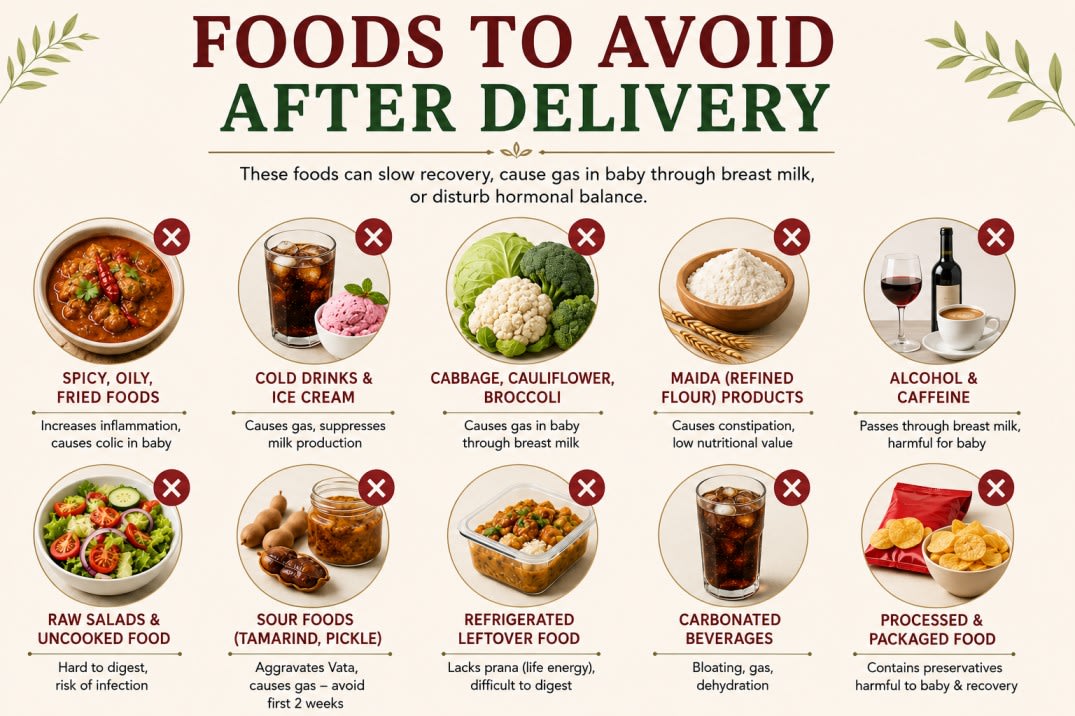
Foods to Avoid After Delivery
These foods can slow recovery, cause gas in baby through breast milk, or disturb hormonal balance.
Avoid These Foods
Spicy, oily, fried foods
Cold drinks & ice cream
Cabbage, cauliflower, broccoli
Maida (refined flour) products
Alcohol & caffeine
Raw salads & uncooked food
Sour foods (tamarind, pickle)
Refrigerated leftover food
Carbonated beverages
Processed & packaged food
Reason
Increases inflammation, causes colic in baby
Causes gas, suppresses milk production
Causes gas in baby through breast milk
Causes constipation, low nutritional value
Passes through breast milk, harmful for baby
Hard to digest, risk of infection
Aggravates Vata, causes gas — avoid first 2 weeks
Lacks prana (life energy), difficult to digest
Bloating, gas, dehydration
Contains preservatives harmful to baby & recovery
Hydration Guide — What to Drink
Warm water: 8–10 glasses daily — aids digestion, prevents UTI, clears lochia
Warm full-fat milk: 2–3 glasses daily — calcium for bones, promotes milk production
Ajwain/saunf/methi water: 2 cups daily — reduces gas, boosts milk, cleanses uterus
Coconut water: 1 glass daily — electrolytes, natural hydration, energy
Haldi milk (turmeric milk): Every night — anti-inflammatory, promotes healing sleep
Fresh fruit juices (warm/room temp): Pomegranate, beetroot — iron-rich; avoid cold juices
Dry fruit milkshake: Almond + dates + milk — energy-dense, calcium-rich.
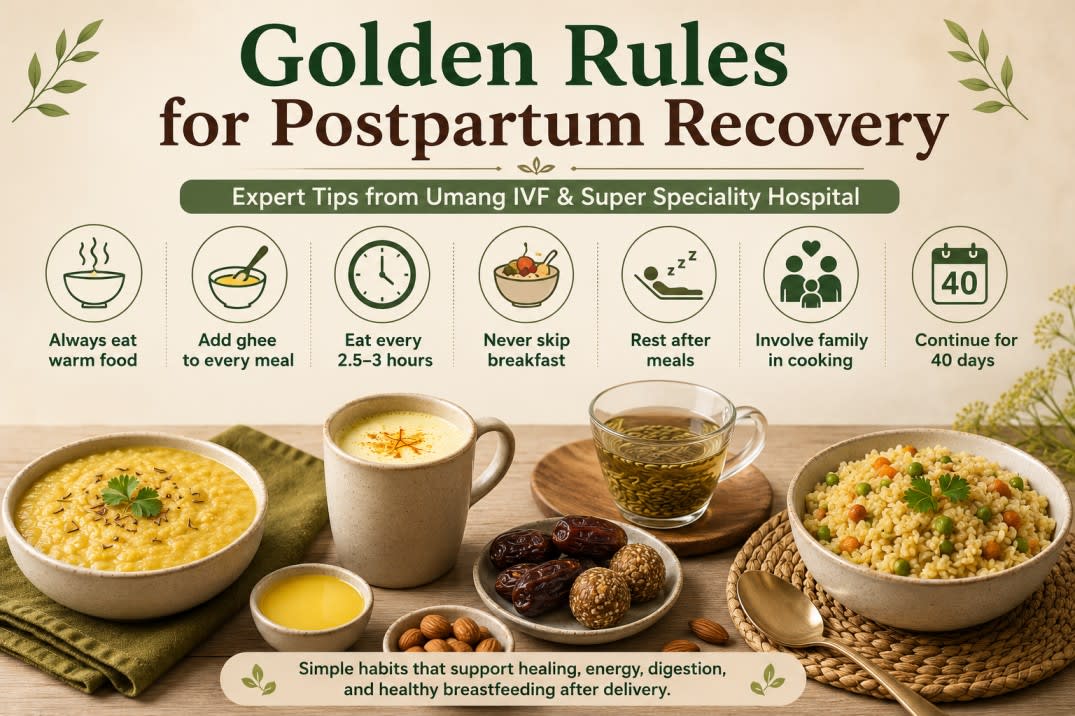
Golden Rules — Tips from Umang IVF & Super speciality hospital
Always eat warm food: Cold food is harder to digest and can suppress milk supply
Add ghee to every meal: 1 tsp ghee per meal — essential for healing and milk fat content
Eat every 2.5–3 hours: Small frequent meals prevent blood sugar dips and maintain energy
Never skip breakfast: Most critical meal — sets the energy tone for the whole day
Rest after meals: Lie on the left side for 15–20 minutes after lunch for better digestion
Involve family in cooking: New mother should NOT cook in the first 2 weeks — rest is priority
Continue for 40 days: The traditional saava maheena (40 days) is scientifically validated for full postnatal recovery
FAQs
1. What should a new mother eat after delivery?
Warm, nutritious foods like khichdi, dal, ghee, milk, and postpartum superfoods help support healing and recovery.
2. Which foods increase breast milk naturally?
Methi, saunf, ajwain, gondh, almonds, sesame seeds, and oats are commonly recommended to support milk production.
3. How much water should a breastfeeding mother drink?
A breastfeeding mother should aim for 3–4 litres of fluids daily to stay hydrated and maintain milk supply.
4. What foods should be avoided after childbirth?
Avoid spicy, fried, processed, cold, and heavily caffeinated foods during the early postpartum recovery period.
5. Is the traditional 40-day postpartum diet beneficial?
Yes, the traditional 40-day postpartum diet focuses on rest, healing, nutrition, and recovery, supporting both mother and baby.
Book a Consultation with Dr. Geetika Sharma
Whether you're tracking your cycle, trying to conceive, or have concerns about your reproductive health — the team at Umang IVF Hospital, Bilaspur is here for you.
Call Us
📞 88894 50411
Available during clinic hours
Our Location
Ring Road 2, Shanti Nagar
In Front of Rani Sati Mandir
Bilaspur, CG – 495001
https://maps.google.com/?q=Umang+IVF+Hospital+Bilaspur
Specialities
IVF · Infertility · PCOS · High-Risk Pregnancy · Laparoscopy · Antenatal Care · Fertility Counselling
Online