


A comprehensive guide by Dr. Geetika Sharma, Senior Gynaecologist & Fertility Expert at Umang IVF and Super Speciality Hospital, Bilaspur, Chhattisgarh.
Ovulation is the release of a mature egg from the ovary — the key event in your cycle that makes conception possible. Dr. Geetika Sharma, Bilaspur's most trusted gynaecologist at Umang IVF Hospital, explains the 10 most reliable signs to watch for.
1. Changes in Cervical Mucus
As ovulation approaches, cervical mucus changes from dry or sticky to clear, slippery, and stretchy — much like raw egg white. Driven by rising oestrogen, this fertile-quality mucus (EWCM) appears 1–5 days before ovulation and marks your most fertile window. After ovulation, discharge becomes thick and opaque again.
Dr. Geetika's tip: "I advise patients to check mucus before using the toilet each morning. When it stretches between your fingers without breaking, you are at peak fertility. This is a reliable, free, and always-available sign."
2. Rise in Basal Body Temperature (BBT)
Your resting body temperature — measured first thing in the morning — rises by 0.2–0.5°C after ovulation due to a surge in progesterone. This sustained rise lasts until your next period and confirms ovulation has taken place. Tracking BBT over 2–3 cycles creates a personal fertility map.
Dr. Geetika's tip: "Use a digital basal thermometer, measure at the same time before you sit up, and chart the data in an app. Three months of consistent data reveals meaningful patterns that even we as doctors find useful for planning fertility treatment."
3. LH Surge — Positive Ovulation Predictor Kit
A surge in Luteinising Hormone (LH) triggers ovulation roughly 24–36 hours later. Ovulation Predictor Kits (OPKs) detect this LH surge in urine with over 97% accuracy, giving you the most actionable advance warning of your fertile window. They are available at most Indian pharmacies.
Dr. Geetika's tip: "For a 28-day cycle, begin testing from Day 10. Test late morning (10am–12pm) daily. Women with PCOS should combine OPK testing with ultrasound monitoring at Umang IVF — OPKs alone can give false positives with elevated LH from PCOS."
4. Mild Pelvic Pain (Mittelschmerz)
Around 20% of women feel a one-sided twinge or cramp as the follicle ruptures to release the egg. Called Mittelschmerz (German for "middle pain"), it can last from minutes to several hours and may alternate sides each cycle depending on which ovary is active.
Dr. Geetika's tip: "Mild mid-cycle pain is normal and reassuring for many women tracking ovulation. However, if the pain is severe, prolonged, or accompanied by fever or heavy bleeding, please call us immediately at 88894 50411 — it needs urgent evaluation."
5. Breast Tenderness or Sensitivity
The oestrogen surge followed by rising progesterone around ovulation can make the breasts feel tender, full, or more sensitive. Unlike pre-menstrual breast tenderness (which appears in the second half of the cycle), ovulation tenderness is felt mid-cycle and typically resolves within 1–2 days.
Dr. Geetika's tip: "Use a period tracking app to note breast changes alongside other signs. When you see the pattern recurring at the same cycle day each month, it becomes a reliable personal fertility cue unique to your body."
6. Increased Sex Drive (Libido)
Oestrogen and testosterone peak simultaneously at ovulation, driving a noticeable increase in libido. Research consistently shows sexual desire peaks in the days immediately surrounding ovulation — nature's way of encouraging reproduction at the most fertile time.
Dr. Geetika's tip: "Many couples trying to conceive miss the body's own cues by over-focusing on scheduled intercourse. Trust your natural signals alongside OPK results. The combination of both gives you the highest chance of timing correctly."
7. Light Mid-Cycle Spotting
Some women notice a light pink or brown tinge in discharge for 1–2 days around ovulation, caused by the brief oestrogen drop before the LH surge or by the follicle rupturing. It is always very light — just a spot on tissue — and distinct from a menstrual period.
Dr. Geetika's tip: "Ovulation spotting is harmless and even helpful as a fertility marker. However, irregular or heavy bleeding between periods should always be investigated. Do visit Umang IVF or call 88894 50411 if you're unsure."
8. Bloating
Oestrogen and LH fluctuations at ovulation cause temporary water retention and mild abdominal bloating. When it appears consistently at mid-cycle — typically days 12–16 — alongside other signs, it forms part of your personal fertility awareness picture.
Dr. Geetika's tip: "Staying hydrated, reducing salt intake, and gentle yoga or walking ease ovulation bloating well. Severe or painful bloating in women with PCOS needs medical review — it can occasionally signal ovarian hyperstimulation in those on fertility medications."
9. Heightened Senses — Smell, Taste & Vision
Studies show women's sense of smell sharpens at ovulation, particularly sensitivity to certain pheromones — likely an evolutionary adaptation. Some women also notice heightened taste or more vivid visual perception. These subtle signs are rarely tracked alone, but for some they offer a consistent monthly cue.
Dr. Geetika's tip: "Your body is extraordinarily intelligent. The more you observe it across different dimensions, the better your fertility awareness becomes. Keep a simple daily log — even 2 weeks of notes helps us help you better in a consultation."
10. Changes in Cervical Position
As ovulation approaches, the cervix rises higher, softens, and opens slightly — remembered by the acronym SHOW (Soft, High, Open, Wet). After ovulation it returns to its firm, low, closed state. This method takes consistent daily practice over several cycles to interpret accurately.
Dr. Geetika's tip: "Cervical position checking is a valuable Fertility Awareness Method, but requires patience and consistency. I recommend learning it alongside OPK testing. For women who find tracking complex or stressful, our team at Umang IVF offers dedicated fertility counselling."
Ovulation: Myths vs Facts
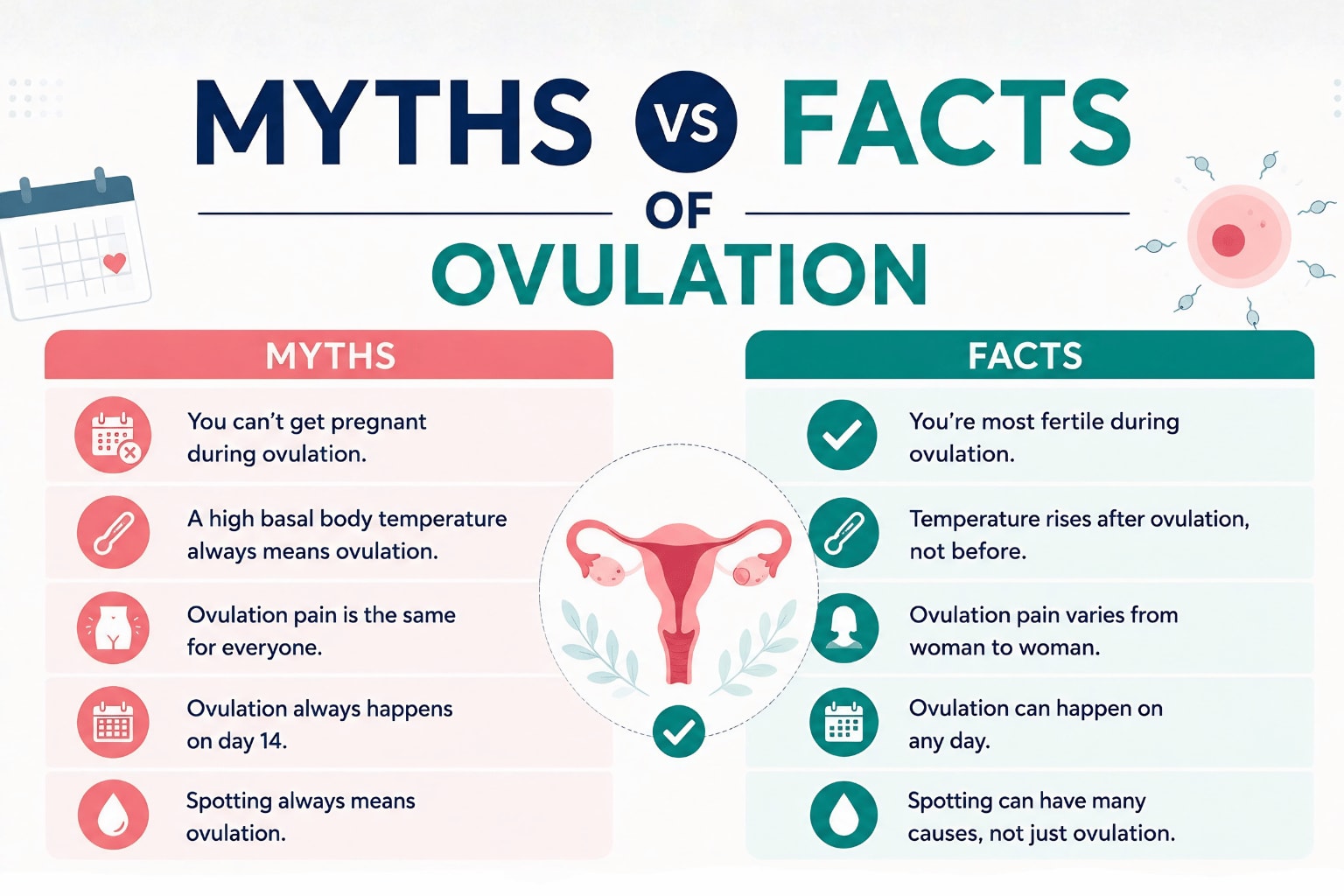
MYTH: Every woman ovulates on Day 14
FACT: Ovulation varies widely — from Day 11 to Day 21 or later, even in regular cycles. Stress, illness, and lifestyle all shift the date. Tracking is the only reliable way to know your personal ovulation day.
----------------------------------------
MYTH: You can only conceive on the day of ovulation
FACT: Sperm survives up to 5 days in the reproductive tract. Your fertile window spans 5–6 days — the 4–5 days before ovulation and the day itself. Timing intercourse across this window maximises success.
----------------------------------------
MYTH: Regular periods mean you definitely ovulate
FACT: Anovulatory cycles — periods without egg release — can occur even with regular cycles. PCOS, thyroid disorders, and stress are common causes. An OPK or progesterone blood test can confirm ovulation.
----------------------------------------
MYTH: Ovulation always causes noticeable pain
FACT: Only around 20% of women feel mittelschmerz. Most ovulate without any physical sensation at all. Absence of pain does not mean ovulation has not occurred.
----------------------------------------
MYTH: Breastfeeding is reliable contraception
FACT: While exclusive breastfeeding can suppress ovulation temporarily, it is not a reliable contraceptive method. Ovulation can return before your first post-partum period — meaning pregnancy is possible without warning.
What Patients Say About Dr. Geetika Sharma
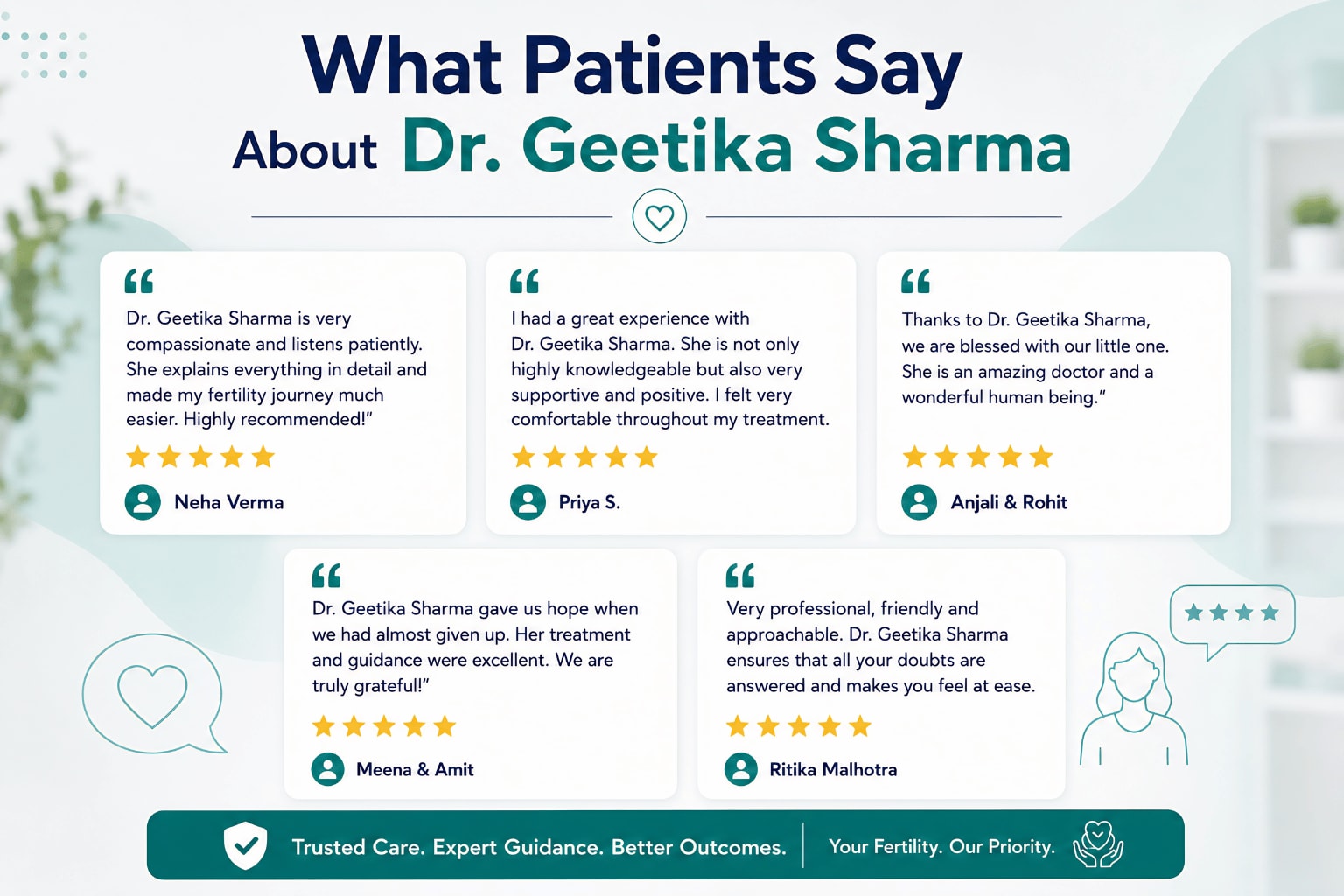
★★★★★
"We became parents after 21 years of marriage in our very first IVF attempt. Thank you Dr. Geetika Sharma — your guidance was everything."
— Laxmi S., Bilaspur
★★★★★
"Dr. Geetika mam managed my high-risk pregnancy with both skill and compassion. I went home with my healthy baby. Best maternity care in Bilaspur."
— Verified Patient, Bilaspur CG
★★★★★
"Her nature never makes you feel like you're at a hospital. She is knowledgeable, caring, and genuinely invested in your outcome."
— Sudershan K., Google Review
Frequently Asked Questions
How long does ovulation last?
The egg is viable for 12–24 hours after release. But sperm survives up to 5 days in the reproductive tract, creating a fertile window of 5–6 days. Timing intercourse in the 2–3 days before ovulation is most effective.
Can I get pregnant without noticing any ovulation signs?
Absolutely. Many women ovulate without noticeable symptoms. Using an OPK is the most practical way to confirm ovulation regardless of whether you feel any signs.
I have PCOS — will I still get ovulation signs?
PCOS often causes irregular or absent ovulation. Dr. Geetika Sharma recommends hormonal testing and ultrasound monitoring for women with PCOS who are trying to conceive, rather than relying on OPKs alone. Call 88894 50411 for a consultation.
When should I see a doctor about ovulation problems?
If you have been trying to conceive for over 12 months (6 months if over 35), have very irregular cycles, or suspect you are not ovulating — visit Umang IVF Hospital, Bilaspur or call 88894 50411 for a full evaluation.
Is Umang IVF the best fertility centre in Chhattisgarh?
Umang IVF & Super Speciality Hospital is NABH certified and rated 4.9/5 across 1,200+ patient reviews — among the highest-rated hospitals in Chhattisgarh for IVF, infertility, gynaecology, and obstetrics.
Book a Consultation with Dr. Geetika Sharma
Whether you're tracking your cycle, trying to conceive, or have concerns about your reproductive health — the team at Umang IVF Hospital, Bilaspur is here for you.
Call Us
📞 88894 50411
Available during clinic hours
Our Location
Ring Road 2, Shanti Nagar
In Front of Rani Sati Mandir
Bilaspur, CG – 495001
https://maps.google.com/?q=Umang+IVF+Hospital+Bilaspur
Specialities
IVF · Infertility · PCOS · High-Risk Pregnancy · Laparoscopy · Antenatal Care · Fertility Counselling
Online